
Singapore carries some of the heaviest property restrictions in the world — a 60 percent foreign buyer’s tax, a lengthened seller’s duty, tightened lending limits. And yet prices have risen for six straight quarters. The honest answer to “is it still worth it?” is not one answer. It is three.
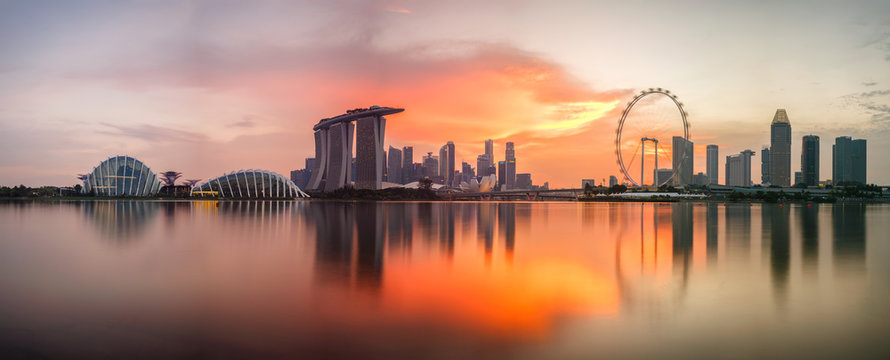
It has become fashionable to declare the Singapore property market closed for business. The headline numbers invite it: foreigners now pay 60 percent Additional Buyer’s Stamp Duty on a residential purchase, the seller’s stamp duty was lengthened back to four years in mid-2025, and successive rounds of cooling measures have made this one of the most heavily managed property markets on earth.
But “heavily managed” and “uninvestable” are not the same thing. A market can be deliberately restrained and still be one of the most reliable stores of capital in Asia. In fact, for a certain kind of investor, the restraint is precisely the point.
This piece does not give a single verdict. The Singapore property market is really three distinct markets — residential, commercial, and industrial — each with its own tax treatment, its own buyer pool, its own liquidity profile, and its own outlook. They do not move together, and they should not be judged together. What follows is a segment-by-segment view of where each one stands today, and where the evidence points next.
“‘Heavily managed’ and ‘uninvestable’ are not the same thing. For a certain kind of investor, the restraint is the point.”
Residential: Restrained on Purpose, Not Broken
Start with the segment everyone watches, because it is where the cooling measures bite hardest — and where the resilience is most striking.
Despite carrying what is fairly described as the world’s heaviest set of residential cooling measures, the private residential market is still grinding upward. The Urban Redevelopment Authority’s price index rose 0.9 percent in the first quarter of 2026 — the sixth consecutive quarter of growth. Suburban homes did the heavy lifting: the Outside Central Region gained 2.2 percent, the Rest of Central Region 0.8 percent, and the Core Central Region 0.6 percent. Landed homes were the one soft spot, slipping 1.8 percent.
This is not a runaway market, and it is not meant to be. It is a market being held to a slow, deliberate upward trajectory by design. That distinction matters more than it first appears.
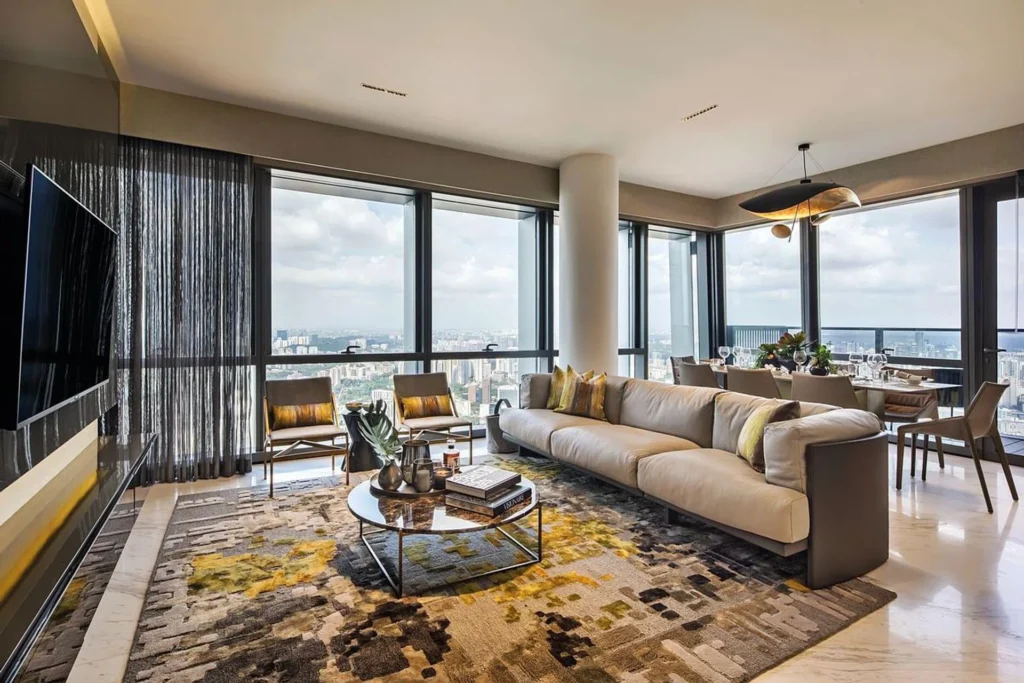
Prices are rising slowly and steadily — not because the brakes are off, but because the brakes are being held at a precise, policy-set pressure.
Why the restraint is a feature, not a bug. Here is the part most casual observers miss. The Singapore residential market is, in effect, being artificially held down. Layer upon layer of stamp duty, lending limits, and holding-period penalties are actively suppressing demand that would otherwise push prices higher. That has an important and under-appreciated consequence for risk: the government holds a large stock of policy levers it can release if the market ever turns down.
This is not a theoretical claim. It has already happened. In 2017, after the market had cooled materially, the authorities did exactly this — they shortened the seller’s stamp duty holding period from four years to three and eased a slice of the lending framework. The price index began recovering through 2017 and 2018. The toolkit is real, it has been used, and it cuts both ways.
It is worth being objective about the other side of this. Since 2009, the broad direction of policy has been tightening, not loosening — the 2017 episode is the only meaningful relaxation in roughly seventeen years, and as recently as July 2025 the government went the other way, reverting the seller’s stamp duty to a four-year holding period and raising the rates by four percentage points per tier (16 / 12 / 8 / 4 percent). So no one should assume the measures will be unwound on demand. The honest framing is narrower but still powerful: the suppressed demand and the unused policy headroom together form a genuine cushion under prices. A market kept deliberately below its natural clearing level has less far to fall, and a government with levers in reserve has the means to arrest a decline. That is a structurally lower-risk setup than a freely speculative market running at full tilt.
“A market kept deliberately below its natural clearing level has less far to fall — and a government with levers in reserve has the means to arrest a decline.”
The state of foreign capital. For non-resident buyers, the residential door is, for practical purposes, almost shut. The 60 percent ABSD rate for foreigners — in place since April 2023 and left untouched in Budget 2026 — is simply too punitive for most cross-border residential investment to make sense. On a S$3 million condominium, that is S$1.8 million in tax before a single dollar of capital appreciation. Foreign residential demand has, by design, been crushed.
But there is a crucial and frequently overlooked exception, and it rewrites the calculation entirely for a specific group of buyers. Under Singapore’s free trade agreements, nationals of a handful of countries are treated exactly as Singapore citizens for stamp duty purposes. That list comprises the United States, plus Iceland, Liechtenstein, Norway and Switzerland (the latter four under the EFTA agreement). For these buyers, the 60 percent wall does not exist. They pay 0 percent ABSD on their first residential property, 20 percent on a second, and 30 percent on a third — the same schedule a citizen pays.
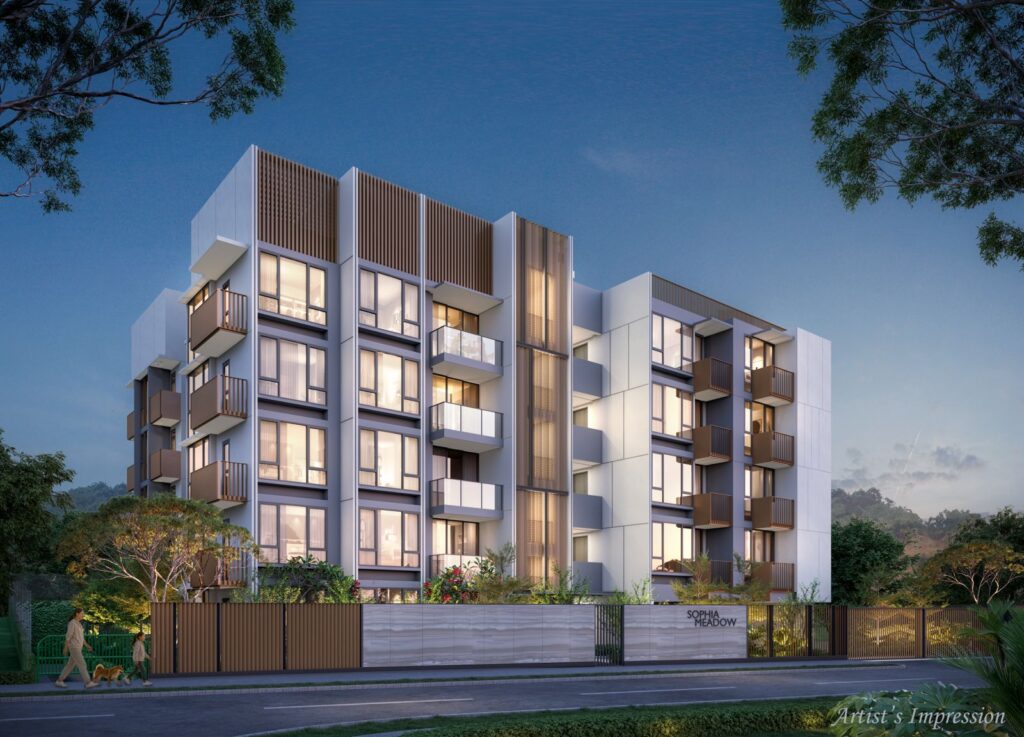
One treaty clause turns Singapore from off-limits to genuinely attractive — for the right passport.
The American case, specifically. For a US citizen, Singapore residential property may be one of the more compelling entries available in Asia right now — and the reasoning is worth laying out carefully, because it rests on two independent supports.
The first is the tax treatment above: an American citizen buying a first home in Singapore steps over the 60 percent barrier that keeps almost every other foreigner out. (One precise caveat: the US benefit applies to citizens, not green-card holders, and it must genuinely be a first Singapore residential property.)
The second support is a currency-and-price argument set out in DBS Bank’s October 2025 report, Singapore 2040: The Next 15 Years of Quality and Inclusive Growth. DBS projects private residential prices to compound at 2 to 3 percent a year, leaving them roughly 35 to 55 percent higher by 2040, with average per-square-foot prices potentially exceeding S$4,000 as the population grows toward 6.9 million and 200,000–320,000 new homes are absorbed. Set alongside that, DBS expects the Singapore dollar to reach parity with the US dollar by 2040, supported by a weaker greenback, steady productivity-led growth, safe-haven inflows and a persistent current-account surplus.
For a US-dollar investor, those two forecasts stack. A property that appreciates in Singapore-dollar terms, held in a currency expected to strengthen against the US dollar, produces a compounding return in USD that is larger than the local-currency price gain alone. The same logic that makes the SGD attractive to hold makes SGD-denominated property doubly attractive to a dollar-based buyer — if the DBS currency call proves right.
A word of discipline first, because this is a fifteen-year forecast and in no way a certainty. Projections this long-dated carry wide error bars; DBS frames them as a constructive base case, not a promise, and parity would require a sustained run of conditions breaking Singapore’s way. It should be read as a direction of travel, not a number to bank on.
That said, who is making the forecast deserves weight — and here the case for taking it seriously is stronger than for a typical bank research note. DBS is a government-linked institution: its single largest shareholder is Temasek, the Singapore state’s investment company, which holds roughly 28 to 29 percent. A long-range outlook from a bank anchored to the state is not a neutral piece of analysis floating free of policy — it is, to a meaningful degree, a window into the official thinking about where the country is being steered. When a government-linked bank publishes a fifteen-year roadmap for prices, population and the currency, it is reasonable to read it partly as a statement of intended direction, not merely a prediction of it.
The currency call is the clearest example. Singapore is unusual in that it runs monetary policy through the exchange rate, not the interest rate. The Monetary Authority of Singapore manages the Singapore dollar against a trade-weighted basket within a calibrated band, and tightens or eases by adjusting the slope and centre of that band rather than by moving a policy rate. In other words, the trajectory of the SGD is not left to the market alone — it is an actively managed policy instrument. A forecast of long-term SGD strength, coming from a state-anchored bank, in a system where the currency is the central policy lever, is therefore far more than idle speculation. It is broadly aligned with the direction the country’s own monetary framework is built to deliver: a stable-to-strengthening currency that protects purchasing power and anchors Singapore’s standing as a safe-haven store of value.
None of this guarantees parity by 2040 — exchange-rate management operates within limits, and global forces can overwhelm a small open economy. But the combination of a government-linked forecaster, an exchange-rate-based monetary regime, and a consistent multi-decade policy of currency stability makes a genuinely credible case that the DBS study reflects where Singapore is actually headed. For a US-dollar buyer who can access citizen-equivalent terms, that is a favourable backdrop to be holding a Singapore-dollar asset against — provided it is treated as a well-reasoned tailwind, not a sure thing.
Residential — market status and outlook. Status: slow, policy-managed appreciation; six straight quarters of gains led by the suburbs; transaction volumes thinner as buyers digest higher selling duties. Foreign demand suppressed except for treaty-privileged nationals. Outlook: continued low-volatility upward grind is the base case, underpinned by structural supply constraints and a population pushing toward 6.9 million. Downside is cushioned by deliberate demand suppression and a deep policy toolkit. The clearest opportunity sits with American and EFTA buyers who can transact on citizen terms — for them, the resilience story and the currency story point the same way.
Commercial: No Stamp-Duty Friction, Smoother to Run
Move across to commercial property and the entire tax conversation changes.
Commercial real estate — offices, shophouses used for business, retail strata units — sits entirely outside the ABSD and SSD regimes. There is no Additional Buyer’s Stamp Duty on a second, third or tenth commercial unit, and there is no Seller’s Stamp Duty holding-period penalty at all. An investor can buy a strata office and sell it a month later with zero duty on the exit. (The trade-off to keep in view: GST applies to most commercial purchases, and commercial mortgages typically price 20 to 50 basis points above an equivalent residential loan at lower loan-to-value ratios.)
This freedom from the cooling-measure machinery is exactly why so much investor capital rotated into strata commercial and industrial space from 2023 onward, as buyers looked for ABSD-free alternatives to a residential market that had become punitive for multiple-property owners.
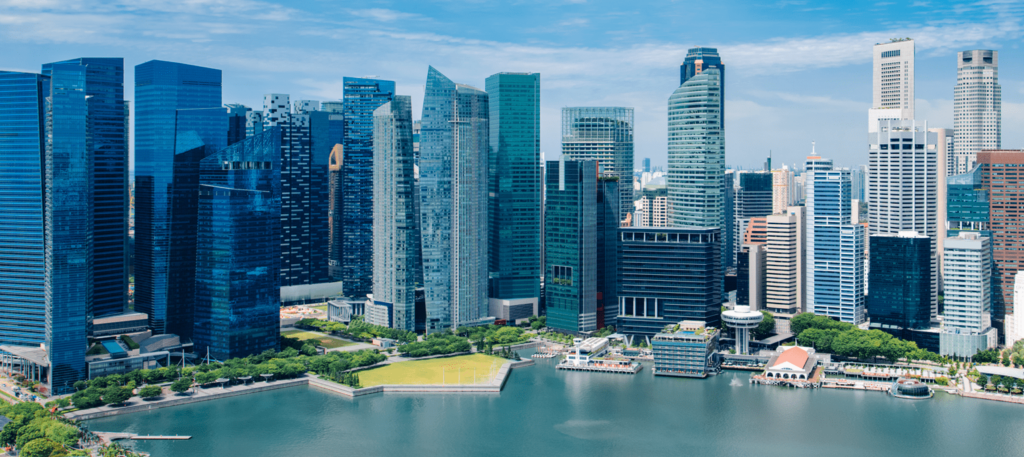
No buyer’s surtax, no seller’s holding penalty — the tax frictions that dominate residential decisions simply do not apply here.
No duty clock on either side of the trade. The significance of this is easy to understate. On the residential side, the four-year Seller’s Stamp Duty now actively dictates timing — sell too early and a meaningful slice of any gain is handed back to the state. On the buy side, the ABSD regime penalises every additional residential property an investor accumulates. Commercial property is free of both. There is no holding-period penalty to time a sale around, and no escalating surtax that makes a second or third purchase uneconomic. An investor can build a portfolio of commercial units, and reshape it whenever strategy dictates, without the cooling-measure machinery dictating the calendar. For an active investor, that flexibility is itself a form of value.
The operational case. There is a quieter, practical reason experienced landlords favour commercial space, and it has nothing to do with tax. Commercial tenants are, as a rule, businesses — and businesses tend to fit out and maintain their own premises. They install their own systems, manage their own interiors, and treat the space as an operating asset. The day-to-day friction that defines residential tenancies — the late-night call that the air-conditioning isn’t cold enough, the failing water heater, the dishwasher that needs replacing — largely disappears. A well-let commercial unit on a multi-year lease to a professional occupier is simply less management-intensive than an equivalent capital sum spread across residential units. That operational ease is a real, if unglamorous, component of total return.
“No buyer’s surtax, no seller’s holding penalty. Commercial property lets an investor build and reshape a portfolio without the cooling-measure machinery dictating the calendar.”
Commercial — market status and outlook. Status: prices and rents have been firming since 2023; Grade A CBD office rents are expected to grow on a constrained development pipeline, and prime retail rents are forecast to rise in the low single digits. Outlook: limited new office supply is supportive of rents into 2026; the complete absence of ABSD and SSD keeps the segment structurally attractive to multiple-asset investors, who can accumulate and rotate holdings free of the duties that govern residential strategy. Best suited to investors who value tax flexibility and low management overhead.
Industrial: Scarce Land, Sticky Tenants, a Long Upcycle
The third market is the one that most rewards a close reading — and the one where Singapore’s physical constraints do the most work.
On tax, industrial property sits in between the other two. There is no ABSD on industrial assets — a significant advantage over residential. But unlike commercial, industrial property does carry a Seller’s Stamp Duty: a three-year holding regime at 15 / 10 / 5 / 0 percent for properties bought on or after 12 January 2013. The penalty disappears after three years, so it disciplines short-term flipping without troubling a genuine medium-term holder. For an investor whose horizon is measured in years rather than months, it is a mild constraint, not a deterrent.
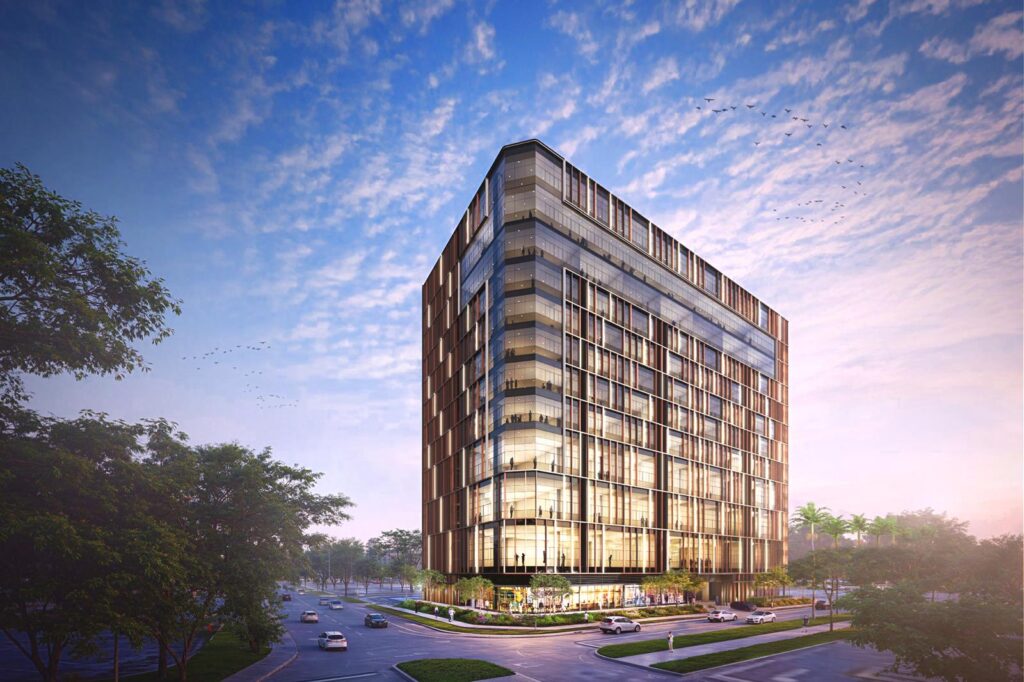
Industrial space is genuinely scarce in land-starved Singapore — and the supply pipeline is running below its own ten-year average.
Scarcity is the structural story. Singapore is a city-state of roughly 730 square kilometres with no hinterland to expand into. The overwhelming majority of industrial land is held by the state through JTC on finite leases, and new industrial land releases are tightly controlled. That scarcity shows up directly in the supply data: as of early 2026, incoming supply across most industrial segments is running below its ten-year historical average, and the business-park pipeline over the next three years is almost empty. Roughly 8 million square feet — about 1.4 percent of total stock — is due over the remaining quarters of 2026, and single-user factories (typically built for one occupier) account for the majority of even that. For the investible multi-user segment, genuinely new supply is thin. When supply cannot easily grow, existing stock behaves like a closed pool — which is exactly the characteristic long-term investors look for.
Freehold industrial — the rarest entry of all. Within that already-scarce pool sits a far scarcer sub-category worth singling out: freehold industrial title. By most estimates more than 90 percent of Singapore’s industrial land is held on JTC leases of 30 or 60 years, and essentially every new industrial site released by the state is leasehold. A leasehold asset is, in capital terms, a depreciating one on a defined runway — a 30-year lease fifteen years into its life is halfway to expiry. Freehold industrial buildings do exist, but they are mostly older stock, they trade tightly held, and they almost never come from new supply. For an investor who can actually secure one, freehold industrial is the closest thing the segment offers to a permanent claim on scarce, productive land — no tenure decay to price in, no lease-decay discount eating into the exit. It is not easy to come by, and when a well-located freehold industrial unit does reach the market it tends to clear quickly. But for a long-horizon holder, it is the single most durable form this asset class takes — and worth waiting and watching for.
The numbers confirm the thesis. JTC’s Q1 2026 statistics show the industrial market extending its upcycle into a 22nd consecutive quarter of rental growth. The price index reached 113.1, up 1.2 percent on the quarter; the rental index reached 113.2, up 0.4 percent on the quarter and 2.3 percent year-on-year; island-wide occupancy held at a healthy 88.9 percent. The pace has eased from the post-pandemic surge, and tenants have become more selective on location and specification — but a market that has raised rents for twenty-two straight quarters is demonstrating unusual durability.
Why industrial tenants stay. The investment case rests heavily on tenant behaviour, and here the logic is sound. An industrial occupier does not simply move in. It invests substantial capital to outfit the space — power and electrical works, mechanical systems, clean-room or cold-chain infrastructure, racking, machinery, production lines. That sunk fit-out cost makes relocation genuinely expensive and disruptive, so industrial tenants tend to be stickier and less sensitive to rent increases than residential or even office tenants. A landlord raising rent by a few percent at renewal is asking far less of the tenant than the cost and downtime of relocating a fitted-out operation. Sticky tenants on multi-year leases, in a market of structurally scarce space, are the foundation of the segment’s stable income profile.
A state-driven upgrade of the asset class itself. There is a forward-looking dimension that most investors under-weight because it plays out over years, not quarters. Singapore is not merely rationing industrial land — it is deliberately transforming what industrial property is. Through JTC and the URA Master Plan, the government is steering older industrial estates toward a cleaner, denser, more urban model: high-tech and clean industry in place of heavy manufacturing, “transparent factories” with glazed, public-facing frontages and ground-floor showrooms, and industrial space woven into the surrounding city alongside amenities, public realm and improved transport connections rather than fenced off from it. Mature districts such as Kallang–Kolam Ayer have been explicitly identified for this kind of rejuvenation. For an owner, this is a structural tailwind hiding in plain sight: a state-led programme actively raising the quality, the permitted uses, and the long-term desirability of the very stock being held. Buying into an estate slated for this transformation means buying an address while the district around it is being upgraded — historically one of the more reliable supports for long-term value in Singapore.
“When supply cannot grow and tenants cannot easily leave, existing stock behaves like a closed pool — and income behaves like an annuity.”
It would be incomplete not to name the risks. Industrial demand is the most cyclically and globally exposed of the three segments — it tracks trade, manufacturing and logistics activity directly. Analysts have flagged that geopolitical instability and supply-chain disruption through 2026 could slow momentum, with warehouse rental growth already cooling and higher operating costs prompting some occupiers to defer expansion. Industrial is also leasehold almost by definition, so tenure decay is a real factor that must be priced into any long hold. These are manageable risks for a clear-eyed investor — but they are real.
Industrial — market status and outlook. Status: 22 consecutive quarters of rental growth; prices and rents still rising, if more slowly; occupancy near 89 percent; supply below historical averages. Outlook: the structural case — scarce land, constrained pipeline, high tenant switching costs, and a state-led upgrade of the asset class toward clean, city-integrated industry — supports durable income and gradual capital appreciation over a medium-term hold. Near-term momentum is the most exposed of the three segments to global trade and geopolitical shocks. No ABSD makes entry efficient; the three-year SSD rewards patience; and rare freehold stock, where it can be secured, is the most durable form the segment takes. On balance, the strongest structural risk-reward of the three for an income-focused investor who can hold through cycles.
So — Is It Still Investable?
Yes — but the question was always the wrong shape. “The Singapore property market” is not one thing to buy or avoid. It is three markets, and the right answer depends entirely on who is asking and what they are trying to do.
For the resilience-seeking, capital-preservation investor, residential remains a deliberately low-volatility store of value, with a policy cushion under prices that few markets can match. For the American or EFTA-national buyer, residential is more than defensible — citizen-equivalent stamp-duty treatment plus a constructive long-term price-and-currency backdrop make it genuinely opportunistic. For the tax-efficiency-minded, low-maintenance investor, commercial offers freedom from the cooling-measure machinery and easier tenants, at the cost of thinner liquidity. And for the income-focused investor with patience, industrial offers the most compelling structural fundamentals — scarce, sticky, and still climbing.
What unites all three is the same quality that defines Singapore itself: a market engineered for stability over spectacle. That is not a market that delivers the dramatic gains of a speculative boom. It is a market built to hold its value through storms — which, for most serious capital, is the more valuable trait.
“Singapore is engineered for stability over spectacle. That is not the market for a speculative boom — it is the market built to hold value through storms.”
The measures are heavy. The fundamentals are heavier. For an investor who understands the difference between a market that is restrained and a market that is broken, Singapore remains very much investable — provided you buy the right segment, on the right terms, for the right reasons.
Talk to Us Before You Decide
Every one of the points above deserves to be modelled against your own position, currency, and objectives — not taken as a headline. We are happy to walk through the segment-level analysis, the tax treatment that applies to your specific situation, and the numbers behind any opportunity, on a no-obligation basis.
Bluewater Group — Real estate advisory with banking-grade discipline.
Leave a Reply